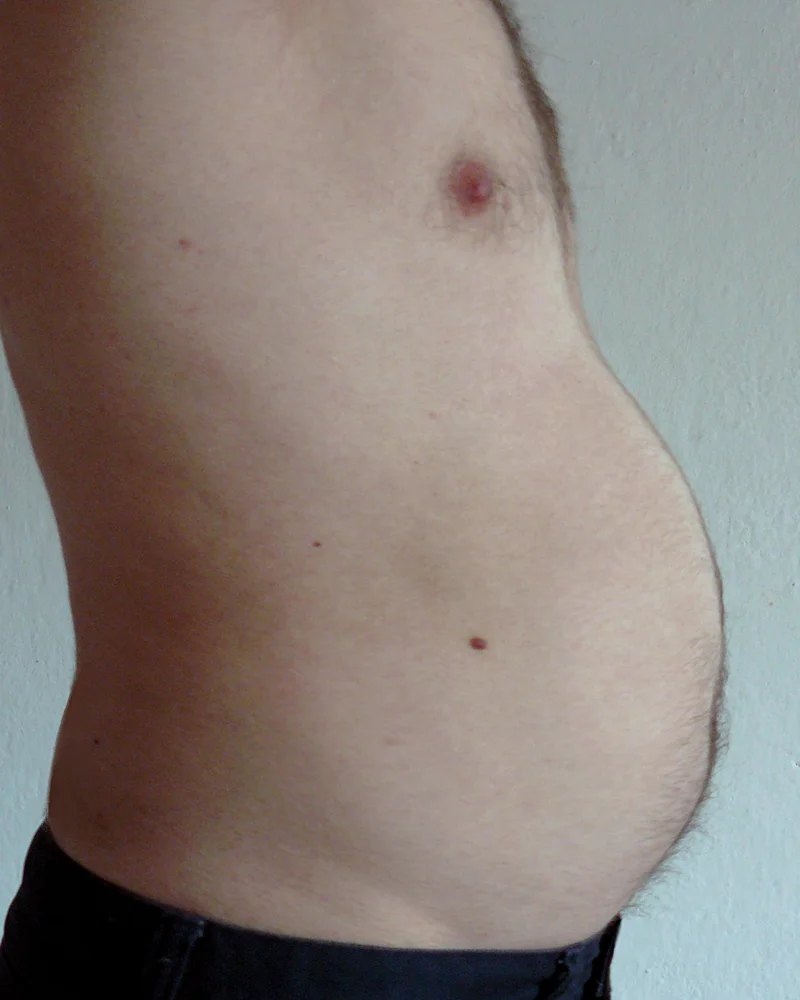
30% Body Fat on Men

30% body fat on men — Overweight. Photos, visible markers, and how to reach it.

←25% Men
Overweight (26-30%)
35% Men→
30% Body Fat on Men - Overweight reference example

Reference physique: Overweight (26-30%)

🔍Visible Anatomical Markers

Abdomen: Prominent belly overhang past waistband and defined love handles. Chest: Noticeable chest fat accumulation. Arms: Full round arms with no muscle definition. Vascularity: None visible.

📋Key Visual Characteristics

  • ✓Significant belly fat and love handles
  • ✓Fat accumulation visible on chest (chest fat / gynecomastia)
  • ✓Increased risk of cardiovascular disease and diabetes
  • ✓Strongly recommended to begin structured diet and exercise
Expert Deep Dive

30% Body Fat on Men: Class 1 Obesity Risk Range

Prominent abdominal distention, elevated visceral fat, and clinical metabolic implications.

📸Visual Analysis & Physical Appearance

At 30% body fat, the waist circumference typically exceeds 40 inches (102 cm), which is a key clinical benchmark for metabolic syndrome. The belly extends noticeably past the chestline.

Subcutaneous fat is prominent across the entire torso, including the lower back, chest, upper arms, and inner thighs. Muscular boundaries are concealed under a thick fat layer.

Posture often displays anterior pelvic tilt and compensatory lumbar lordosis due to the forward mechanical pull of abdominal mass.

🧬Physiological & Hormonal Reality

Metabolically, 30% body fat places men at elevated risk for Type 2 diabetes, non-alcoholic fatty liver disease (NAFLD), hypertension, and sleep apnea.

Chronic low-grade inflammation is elevated, marked by high-sensitivity C-reactive protein (hs-CRP) and circulating inflammatory cytokines. Free testosterone is frequently sub-optimal due to high aromatization in fat tissue.

Knee and lower-back joints experience substantial compressive loading during simple weight-bearing locomotion, increasing orthopedic vulnerability.

⚖️Sustainability & Lifestyle Trade-Offs

Reversing 30% body fat provides profound, life-altering health dividends. Dropping just 5–10% of total body mass significantly normalizes blood pressure, restores insulin sensitivity, and improves restful sleep.

Sustainable transformation requires focusing on sustainable habit architecture rather than extreme, crash starvation diets that trigger hormonal rebound bingeing.

📋Targeted Protocol for 30% Body Fat

Nutrition & Macros: Target a manageable 500–750 kcal daily deficit based on accurate TDEE calculation. Emphasize high-volume, low-calorie-density foods: leafy greens, cruciferous vegetables, lean poultry, white fish, and legumes.

Resistance Training: Machine-based and supported resistance training 2–3 times weekly. Machines (chest press, leg press, lat pulldown) provide safe biomechanical stability without stressing compromised spinal mechanics.

Cardio & Recovery: Low-impact Zone 2 cardiovascular training: 30–40 minutes of flat walking, recumbent cycling, or water walking 4–5 days per week to train cellular mitochondrial efficiency.

🩺Health Level

Elevated health risks. Losing body fat through diet and exercise is strongly recommended for long-term health.

🎯Measure & Verify

Visual estimation is an illustrative reference. Use our free Navy circumference method to calculate your exact body fat percentage.

Calculate Your Current Body Fat →→

How to Reach 30% Body Fat

🥗Nutrition

Start with a 300-500 calorie deficit. Prioritize protein and vegetables. Reduce processed foods and sugary drinks.

🏋️Training

Start with walking 8-10K steps daily. Add 2-3x/week full-body strength training. Add 1-2 cardio sessions.

⏱️Timeline

12-24+ weeks depending on starting point. Use our Goal Timeline Calculator for a personalized plan. Focus on consistency over perfection.

Explore All Men Body Fat Milestones